
80/20 Rule in
Fishing
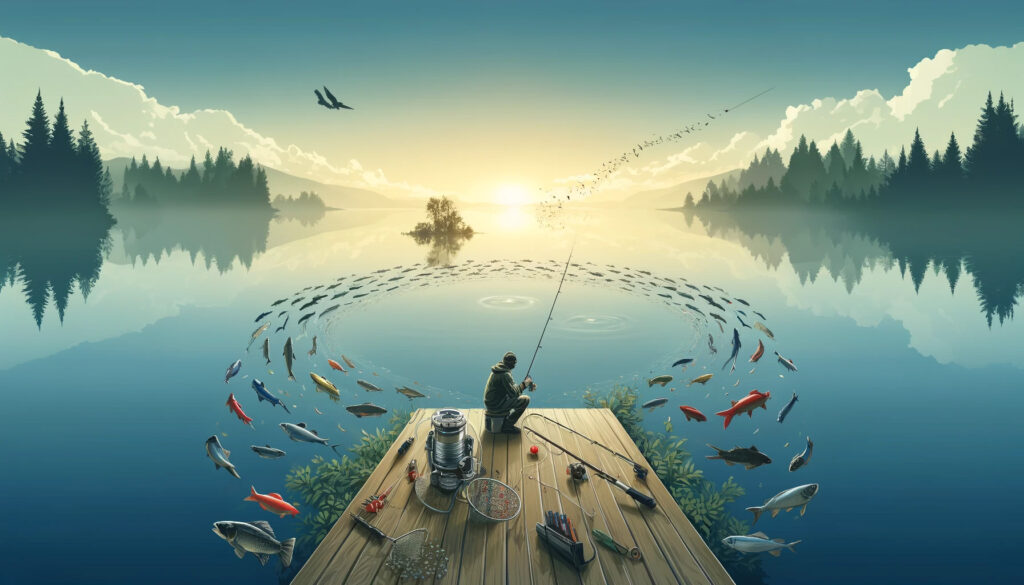
Most blank fishing trips are not caused by a bad rod or bad luck. They happen because the angler spends hours casting into water with no structure, during a weak feeding window, with a lure the fish in that water are not keyed into that day.
The 80/20 rule says a small share of your effort explains most of your results. In fishing, that share is not abstract. A handful of spots on any lake or river account for most of the bites over a season. A few hours a week explain most of the catches. Two or three well-chosen presentations will out-fish a tackle box stuffed with hope. Find those few things for your local water, and every trip stops being a coin flip.
Fish Where Structure Meets Food, Not the Open Water Between Spots
Fish gather around structure because it does two jobs at once: it hides them from things trying to eat them, and it concentrates the baitfish, insects, or crustaceans they eat. A rocky point, a weed edge, a submerged log, a dock with deep water nearby, a current seam below a bridge - these are the edges where predator and prey overlap. Open, featureless water in between rarely offers either advantage, so fish pass through it instead of holding there.
80/20 example: On many bass lakes, a short list of high-percentage spots (a rock point dropping into deep water, a dock with both shade and depth nearby, a weed edge next to a channel) produces most of a season's bites, while long stretches of plain, featureless bank close by produce almost nothing all year.
- Points and humps where the bottom changes depth quickly
- Weed edges, especially where they meet deeper water
- Docks, bridges, and other shade sitting near depth
- Current seams and eddies below any obstruction
- Submerged timber or brush piles
Before you tie on a single lure, spend ten minutes with a map, an app, or a sonar unit marking three to five of these spots. Fish those first, and only explore the open water in between once they have been checked.
Time the Trip Around the Fish's Clock, Not Yours
Fish feed on a schedule that has almost nothing to do with a weekend calendar. Low light at dawn and dusk narrows the visibility gap between predator and prey, which is why so many species feed harder in that window. In tidal water, the turn of the tide moves baitfish and triggers feeding as current starts pushing food past ambush points. Freshwater anglers see something similar around a falling barometer before a storm front, when fish often feed hard in the hours before the weather turns, then go quiet for a day or two afterward.
None of this means you will only ever catch fish in these windows. It means that in many fisheries, a relatively small slice of total fishing hours, the low-light periods and tide changes, produces a disproportionate share of the catches serious anglers log over a season. If you only have three hours to fish this week, moving them to dawn, a tide change, or the day before a front usually beats picking whichever three hours happen to be free on your calendar.
Carry Fewer Baits, But Know Exactly Why Each One Works
A tackle box with thirty lures is not a strength. It is usually a sign that none of them have been tested against a clear situation. A short list of three to five presentations covers the vast majority of situations most weekend anglers actually face, once you understand why each one works instead of carrying it out of habit.
| Situation | High-percentage choice | Why it works |
|---|---|---|
| Clear water, cautious fish | Soft plastic worm or finesse jig | Slow fall and a subtle profile mimic real prey without spooking wary fish |
| Murky water or low light | Spinnerbait or crankbait | Vibration and flash let fish locate it by feel and sound, not sight alone |
| Bottom feeders like catfish | Cut bait or scent-soaked bait | A strong scent trail travels through water where sight is nearly useless |
| Searching unfamiliar water | Jig | Depth control and bottom contact mimic crayfish or baitfish across many depths |
Match the bait to the water and to what the target species is actually eating, not to what looks impressive on a shelf. A trout locked onto a mayfly hatch will ignore a lure a bass would hit hard an hour later on the very same water.
Read Water Temperature and Weather Before You Rig Up
Water temperature sets a fish's metabolism. Too cold, and digestion slows down, so fish feed less often and chase less. Inside a species' preferred range, feeding activity climbs sharply, which is why the same exact spot can be dead in March and loaded by May.
- Wind pushes surface water and the baitfish riding in it toward one shore, often stacking predators along that windblown bank
- A passing cold front frequently shuts feeding down for a day or two afterward, while the pressure drop right before it can trigger a short, intense bite
- Cloud cover extends the low-light conditions many predatory species prefer, effectively stretching the dawn or dusk window
- Rising water after rain can trigger feeding by washing new food into the system, while a sudden clarity change from runoff can shut it down just as fast
You do not need a meteorology degree. A handful of specific triggers, a front's leading edge, a swing into a species' preferred temperature range, a stretch of stable weather after days of storms, explain a disproportionate share of the best days anglers report. Check water temperature and the recent weather trend before you decide where and how to fish, not just when you happen to be free.
Let a Simple Fishing Log Show You Your Own Vital Few
Every angler already collects the data needed to find their personal 80/20. Almost nobody writes it down. A small log turns fishing from a string of anecdotes into a pattern you can actually study: which spots, times, and baits keep producing, and which ones you keep trying out of habit despite a poor track record.
8020 move: After every trip, write down five things: date, water temperature, spot, bait used, and result. After ten trips, review the list. You will usually find that two or three combinations account for most of your good days, and you can stop repeating the ones that quietly do not work.
This works because it turns fishing into a habit of observation, not just a habit of showing up, a principle that pays off well beyond the water (see our guide to habits).
The Short List That Actually Moves Your Catch Rate
None of this requires more gear or more hours on the water. It requires spending the time and gear you already have on the few things that reliably move a catch rate: fishing structure instead of open water, timing trips around real feeding windows, carrying a handful of baits you understand instead of dozens you do not, reading temperature and weather before you rig up, and keeping a log that turns guesses into a pattern.
If fishing is part of a bigger trip, the same instinct for finding the few spots that matter carries over. Picking a good campsite works on the same logic as scouting a good bank (see our guide to camping), and if you fish from a kayak, easing quietly along a weed edge or point without spooking fish is a real edge a motor rarely gives you (see our guide to kayaking).
Most anglers already own everything they need to catch more fish. The upgrade is not the gear. It is paying attention to the few spots, windows, and baits doing most of the work, and being honest enough with your own log to admit which ones are not.