
80/20 Rule in
Wardrobe Management
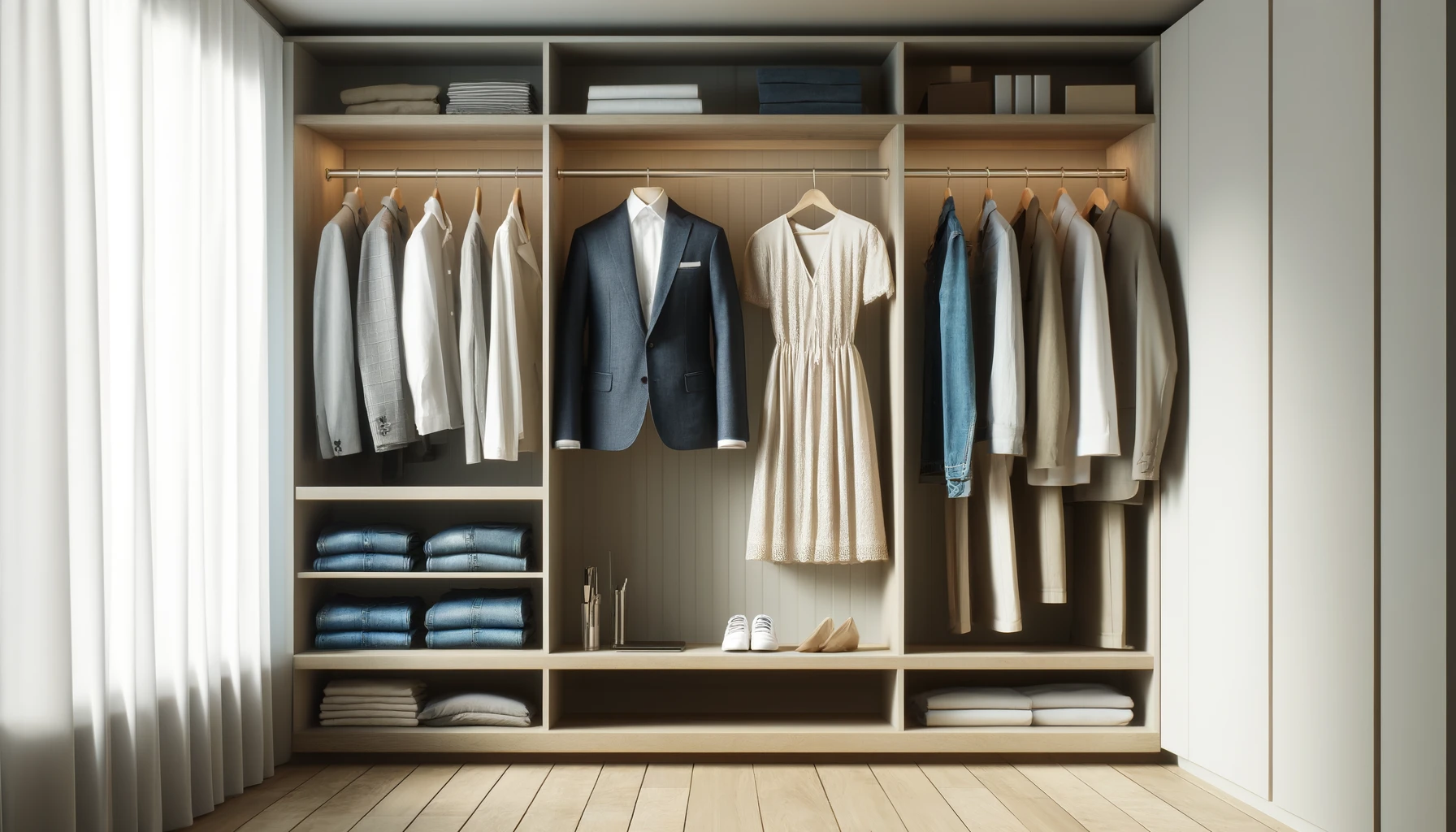
Closet Wear Log and Staples That Earn Most Outfits
The closet is full. Getting dressed still takes twenty minutes. You try three tops. You reach for the same jeans anyway. Most of the rack never entered the decision.
That is the 80/20 rule in wardrobe management. A small set of staples earns most outfits. The rest is clutter that looks like options but rarely leaves the hanger.
Below: the staples worth protecting, what you actually wear, and the closet busywork that rarely speeds up mornings. For real closets - not a fashion editorial or a capsule wardrobe course.
The mismatch: pieces owned vs pieces worn
A closet can look "complete" - seasonal sections, matching hangers, sale finds - while the same five items do the work. Kept outcomes are narrower: out the door on time, outfits that feel right without a reset, money not spent replacing duplicates you never wear. If you cannot name those, the closet lied.
WRAP's clothing research repeatedly finds heavy skew between what people own and what stays in active use. UK survey work cited in their Valuing Our Clothes line of reports found on the order of 30% of wardrobe items had not been worn in the past year - often because of fit, wear, or "saved for later" (WRAP: Measuring the Active Life of Clothing). Hedge: that is population-level survey data, not a promise that exactly 20% of your shirts earn exactly 80% of your wears. Measure your log.
80/20 example: Two weeks where the closet held forty-plus tops but twelve weekday outfits repeated the same four shirts and one pair of trousers, while "event" pieces and duplicate knits never left the hanger. The majority practice was inventory. The concentrated result was a short staple list.
Find your vital few: track what you wear
Do not purge from guilt. Measure first. For fourteen days, log each day you get dressed (or note a skip). Four cells. Keep it ugly and honest.
| Cell | What to write |
|---|---|
| Day | Date or weekday |
| Staples worn | Top · bottom · shoes (add layer if it mattered) |
| Decision | fast · slow · swap (changed after first pick) |
| Kept outcome | easy · late · friction |
After two weeks, count repeats. Which tops, bottoms, and shoes show up most on easy days? That short list is your vital few. Items that never appear - and categories that always trigger swap or friction - are your ignored majority candidates. Do not invent a universal closet Pareto; read your rows.
Illustrative sample: fourteen logged days - ten weekdays, four weekend. Staple repeats: navy chinos (9), white tee (7), grey sweater (6), one white sneaker (8). Kept easy: 9/14. Never worn in the window: six tops bought for "dinners out," two pairs of stiff shoes. The next move was not a bigger closet - it was moving the nine-day chinos and seven-day tee to the fastest hook and pausing buys in those categories.
Closet habits that rarely improve mornings
- Color-coding before you know what you wear
- Keeping occasion clothes for events that never happen
- Duplicate staples in three similar washes
- Full purge weekends without wear data
- Shopping trends that do not match your logged staples
- Storing favorites where they are hard to reach
- Measuring success by hanger count or haul photos
Whole-house clutter cousin when the closet is one zone in a bigger mess: 80/20 in home organization. Broader less-stuff framing: 80/20 in minimalism.
Protect the few pieces that already earn outfits
1. Give staples the fast real estate
Your wear log already ranked the winners. Put them at eye level, on the hook you see first, or in the drawer you open half-asleep. Hide long-tail items if you must keep them - do not make staples compete with guilt clothes every morning.
2. Maintain the repeat list - laundry and repair
Concentration fails when the navy chinos are in the wash and the backup pair does not fit the same. Protect wash rhythm and small repairs on top-repeat items before you shop replacements. WRAP's work treats longer active life as a leverage point - fewer dormant duplicates, more wears from what already works.
3. One-in-one-out in the categories you repeat
New buys in your top-worn categories should replace, not stack. If your log shows four tees doing the work, the fifth should evict a low-repeat tee - not add hanger pressure. Spending cousin: 80/20 in personal finance. Channel cousin: 80/20 in online shopping.
4. Archive or exit the long tail with data
After the log, items unworn for the full window and absent from last year's memory are candidates to donate, sell, or box out of the daily zone. WRAP's surveys give permission to question "just in case" storage - much of it never returns to rotation. You are not failing at fashion. You are matching the closet to your actual days.
Chaos filter: one lever when the closet is loud
When a sale hits, a trip needs packing, or you "have nothing to wear" despite a full rack, pick one lever that still matches your log:
- Wear a logged staple - top three repeat pieces only
- Pause one duplicate buy - same category as your #1 repeat
- Move one winner to fast storage - before reorganizing everything
If none of those still fits, you are not managing a wardrobe - you are shopping feelings. Morning time cousin: 80/20 in time management.
8020 move: Run the wear log for the next ten weekdays before a purge or a haul. Protect the three pieces that already tagged easy; move one long-tail category out of the daily zone.
Why other "closet methods" are secondary
Capsule formulas, trend lists, and rainbow closet tours can help later. They are secondary if you have not logged what you actually wear. Custom storage is secondary if staples still live behind unworn stacks. Find concentration first; then decide whether a system upgrade deserves money and a Saturday.
Before / after: same closet, different concentration
| Scattered closet | Concentrated closet | |
|---|---|---|
| Morning | Try many, pick late | Logged staples first |
| Storage | Equal space for all | Winners at fast reach |
| Shopping | Duplicates and trends | One-in-one-out in repeat categories |
| Purge | Guilt dump | Long tail after wear log |
| What you measure | Hanger count | Repeat wears and easy days |
Same square footage can produce faster mornings - or the same rotation hidden behind more noise. The difference is which pieces you protect.
Misreads that flatten the idea
"Concentration means I need a tiny capsule wardrobe."
No. It means you know which pieces earn outfits in your real life. Size follows the log - not a Pinterest number.
"If WRAP says 30% unworn, I should trash half my closet tonight."
That is survey context, not your log. Log first. Exit long-tail deliberately - especially pieces that never hit easy.
Moves that only make sense if concentration is real
If every piece were equally useful, the right strategy would be more shopping and more organizing. It is not. Run the wear log. Protect repeat staples, fast storage, and one-in-one-out rules. Cut one closet habit your log already flagged - duplicate buys, occasion storage, purge theater.
Start with ten weekdays of staples worn / decision / kept outcome. That is enough to see whether a short repeat list - not another haul - was the missing lever.
Sources & scope
- WRAP, Measuring the Active Life of Clothing - baseline research on regular wear vs dormant wardrobe items (UK).
- WRAP Valuing Our Clothes research line (2012-2017 updates) - survey evidence on large shares of owned clothing rarely worn; fit and "saved for occasion" among common reasons. Summaries via UK Parliament written evidence citing WRAP.
- Wear-log cells and sample weeks - practice patterns. Not body-image, professional styling, or uniform-policy advice. Never invent "20% of clothes = 80% of wears" as a measured law for your closet - count your log.
- Composite log sample marked Illustrative:.